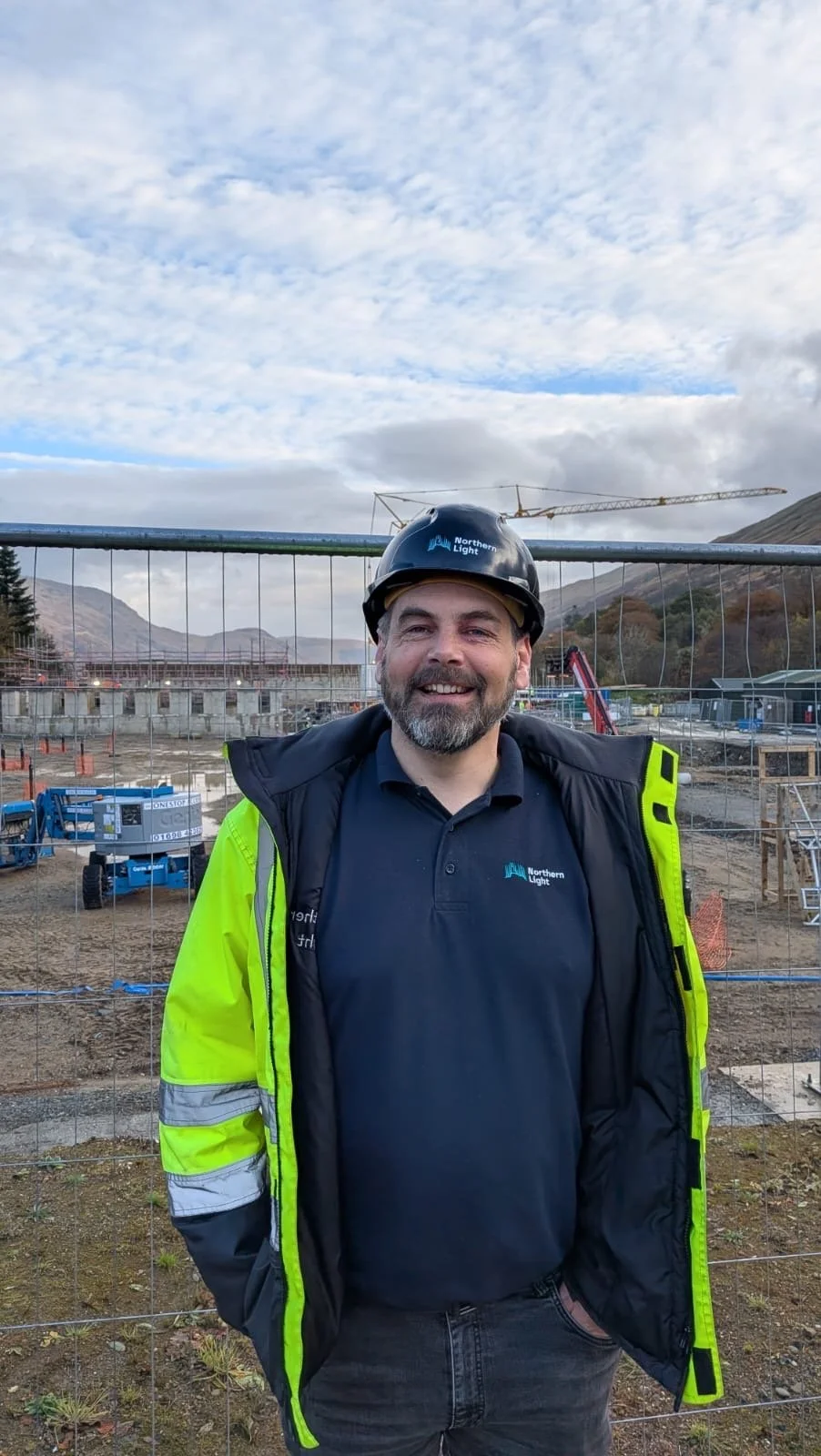
We're delighted to introduce Neil MacDonald, Project Manager & Design Engineer at Northern Light Consulting.
With more than 15 years of experience in engineering, design and project delivery, Neil brings a practical and solutions-focused approach to our marine, aquaculture and infrastructure projects. He supports clients throughout the project lifecycle, from technical feasibility and design development through to procurement support, asset improvement and delivery planning.
Neil's background combines engineering expertise with hands-on operational understanding, allowing him to develop solutions that are not only technically robust but practical to build, operate and maintain. Working closely with clients and project teams, he helps identify constraints early, test options and develop designs that respond to real project requirements.
His experience strengthens Northern Light Consulting's ability to support projects from initial technical assessment through design and into successful delivery.
As part of our Meet the Team series, we caught up with Neil to discuss his engineering career, the value of practical design, lessons learned throughout the industry and what continues to inspire him when delivering projects for clients.
Read the full Q&A below to learn more about Neil's experience, insights and approach to project delivery.
What does Northern Light bring to engineering projects that clients value? – Solutions to problems. We work hard to engineer simple solutions to complex problems and ensure that the projects work through to handover and beyond.
What project are you particularly proud to have worked on and why? – I have enjoyed nearly all my projects. Each one has had its own characteristics, so it is difficult to pinpoint particular aspects. I think the part I am most proud of has been being able working closely with the clients and building a relationship based on trust, that continues past the project completion.
What's the most common engineering challenge you encounter? – I think it is probably scope creep. This comes around from the original scope either not being fully developed and understood or elements being added after the work has begun. This always adds time and cost to the project, and it is difficult to monitor costs when the budget gets stretched to include additional works. If the project has clearly defined
What should clients consider before investing in infrastructure? – Their requirements for the infrastructure, including any enabling works for future expansion. If the work is being done, it is often cheaper to lay some additional services or supporting work during construction, if it will simplify future expansion works. This could be upgrading the electrical supply for future needs, rather than incurring a second upgrade cost when the expansion takes place.
How important is practical experience in engineering design? – practical experience, either your own or the end user is vital to make sure that the project is viable for use on completion. This may be understanding the workflows and ensure there is sufficient space to perform the work or operational requirements to ensure the task intricacies can still be performed
What has been your most technically challenging project to date? – They have all had challenges but certainly Aquascot New Primary was technically challenging. It required installing equipment supplies that should have already been installed once everything landed on-site. This was challenging, as I needed to find contractors available to carry out the work, generate a budget from quotes and then sort out enrolling as approved contractors. The work was straightforward with only a few hiccups along the way. These were resolved with some quick discussion or clarifications with suppliers, and it was all about getting the project completed in a reasonably adjusted timescale to the standard required.
What engineering trend are you most interested in right now? – I don’t have a specific trend that I am avidly following, though the development of technology within aquaculture has continued to be a part of my career for the last decade or so and there are some exciting products coming to market to improve fish health monitoring, with the use of bi-focal cameras and machine learning for live biomass logging in marine sites. This was just a concept before I left my last employer, and it has now progressed to live products available to the market. It provides non-invasive logging of fish size and weight by using differential images to calculate body volume and condition.
What do you enjoy most about working with the NLC team? – the variety of projects that come across the desk mean there is always something new around the corner! We maybe don’t know what the project is yet, but between us we can help the client realise their project’s potential, whether it is building a new facility or helping bring a new product to market, the team has a wide range of skills and experience to get it done!